How To Make Easy Fried Rice Recipe
Use fresh or leftover white rice for this easy, vegetable-studded fried rice. We fry the grains in batches and season lightly for perfect texture and flavor.
Kenji is the former culinary director for Serious Eats and a current culinary consultant for the site. He is also a New York Times food columnist and the author of The Food Lab: Better Home Cooking Through Science.

I've been holding off on doing a full fried rice story for several years now. I'm not really sure why. Fried rice is a great way to use up leftovers; it is infinitely variable, and there are
Minute Homemade Fried Rice
Fried rice comes in many styles. In China, it's typically lightly seasoned with salt and perhaps a little soy sauce or another sauce, along with scant amounts of aromatics and meat. In the Chinese-American tradition, you'll find it made with bigger chunks of meat, and much more sauce. It's the former style that I mostly grew up eating, and that's the style that I'm interested in for now.
Perfect fried rice is all about texture. I was looking for rice that had distinct grains, each with a slightly chewy fried exterior and a tender bite. I wanted grains that were separate enough from each other that you could taste and appreciate their texture, but still sticky enough that you could pick up small clumps with a pair of chopsticks or a spoon.
Fried rice recipes typically call for Chinese-style medium-grain rice, though Thai-style versions use fragrant jasmine, and Japanese-style fried rice can even be made with short-grain sushi rice. I tried making fried rice with all of those, as well as with long-grain rice (standard Carolina and basmati rice) and parboiled rice (like Uncle Ben's). I did not do any testing on brown, wild, or black rice varieties.
Egg Fried Rice Recipe
I was expecting disasters from at least a couple of batches, but surprisingly, they all produced decent results. Longer-grain rice varieties tended to be the most troublesome, as they fell apart a little bit during stir-frying and lacked the plumpness that gives fried rice its signature chewy-tender texture.
I'd always heard that fried rice is best made with day-old rice, and that fresh rice will turn to mush if you try to fry it. But is this really true? And if so, what is it about the resting period that makes older rice superior to fresh rice?
As rice sits after cooking, a couple things happen. First, there's evaporation: The rice gets drier. Second, we've got starch retrogradation: Gelatinized starches that have swollen up and softened during cooking will recrystallize as they cool, turning the rice firm and less sticky. The same things happen with bread; in the past, I've found that most recipes that call for stale bread are actually really more interested in dry bread (see my stuffing recipe, for instance).
Easy Fried Rice Recipe: Homemade Fried Rice
I wasn't sure what I was looking for with rice, stale or dry. So I tried it. Over and over and over again. To test dryness, I used batches of rice that I set under a table fan at room temperature, which I hoped would rapidly dry out the rice without giving it much of a chance to turn stale. To test staleness, I stored batches of rice for lengths of time varying from half an hour to 12 hours, very tightly covered on plates in the fridge, allowing their starches to recrystallize without drying out. I also stored rice the way most of us do: in not-well-sealed Chinese takeout containers. Presumably these batches would get both dry
My results showed some very interesting twists. First off, all of the batches of rice that were under a fan (dried and not staled) worked out well. None of the very tightly wrapped batches worked, which indicates that dryness is an essential factor for fried rice. The batches that were stored loosely wrapped for times ranging between one hour and around six hours actually became
Than rice that had been stored loosely covered in the refrigerator for one to six hours. What gives? Most of my other tests indicated that dryness matters, but surely fresh rice is the moistest of the lot?

Vegan Fried Rice
The important part. It's the surface moisture that is going to cause your rice to rapidly suppress the temperature of the wok. It's the surface moisture that's going to cause your rice to stick together.
That explains why fresh rice and rice that's been placed underneath a fan work well. With rice placed in the refrigerator, on the other hand, you slow down the evaporation process. Meanwhile, internal moisture from the grains will start to move outward, adding moisture to the surface of each grain and making the rice more difficult to fry. Eventually that surface moisture will evaporate again, and the rice will become easier to fry.
This was an obvious one: Excess starchiness is what causes rice to clump. Nobody likes clumpy fried rice. If you are cooking your rice from raw in order to make fried rice, make sure to rinse off excess starch first. A quick dunk and shake in a bowl of cold water, or a 30-second rinse under a cold tap while agitating the rice, is plenty.
Chicken Fried Rice
I did consider whether or not oiling the rice while it was still cold before it hit the wok was a good idea. It's not: Cold oil doesn't spread as well as hot oil, so you end up using way more than you'd typically need. Best to break up the rice by hand and leave the oil for the wok.
Once the rice is broken up, you're ready to cook. Fried rice is more forgiving than most stir-fries (unlike meat or green vegetables, it's not easy to overcook rice), but it's still a fast process. Make sure you have your other ingredients ready to go before putting the wok on the flame.
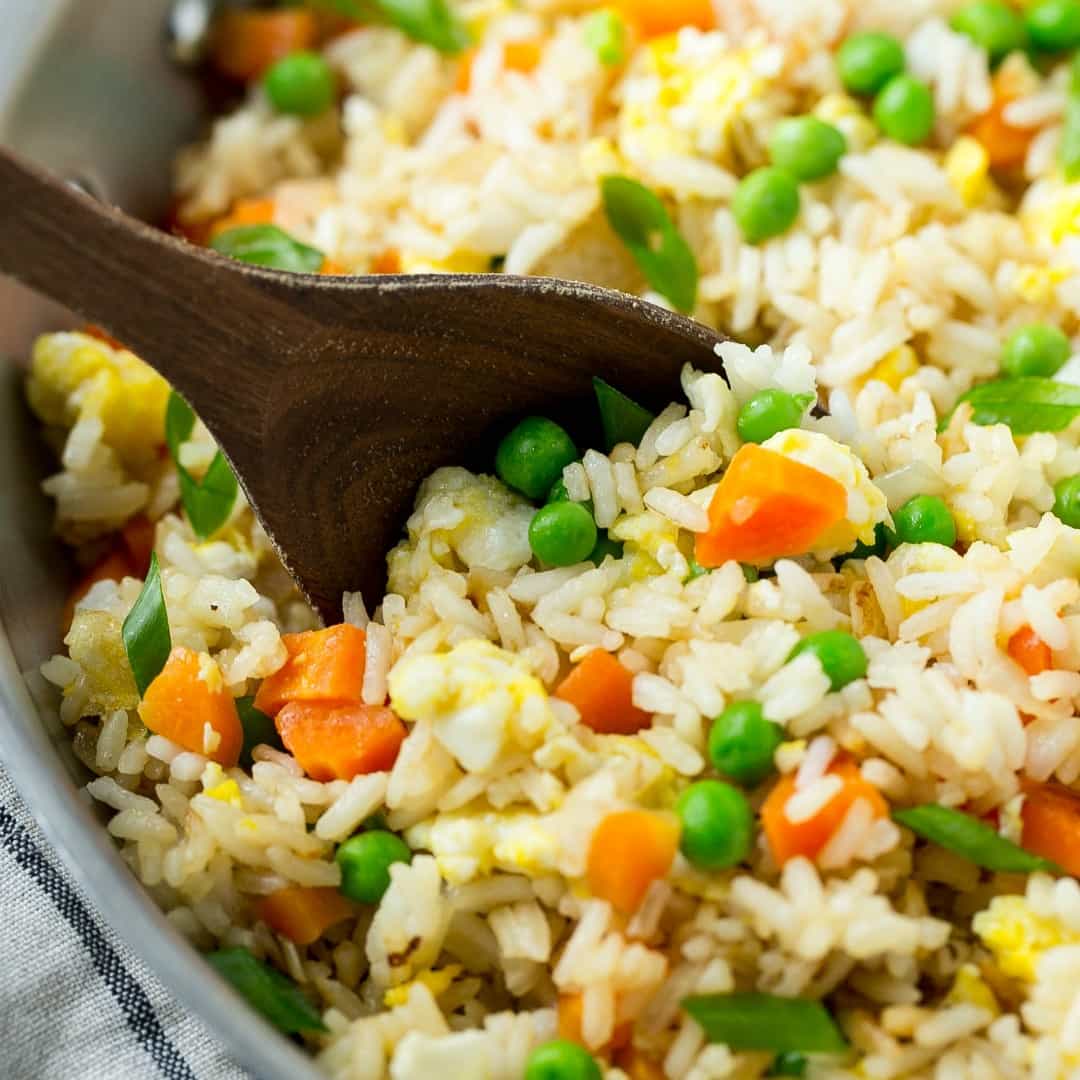
While it's true that woks were not designed to be used on Western-style gas ranges, with their rings of burners, they are still far superior vessels for stir-frying than a skillet or saucepan. Not only does a wok offer different zones of heat (allowing you to push ingredients away from the center when adding new ones), but it also makes tossing and flipping a snap. This is essential for achieving wok hei, the smoky flavor you get from the vaporization and combustion of oil as the rice is tossed in the air.
Best Fried Rice Recipe (easy And Homemade)
I use a flat-bottomed wok so I don't have to worry about accidentally tipping it off the burner. The one I use is inexpensive and made of carbon steel, which will darken to a slick, shiny, nonstick black finish with use. (Click here for more info on how to buy, season and care for your wok.)
The one caveat: Woks work best with gas cooktops, where the flame rises and heats up the sides of the wok as well as the base. If you're using a stovetop with induction or a heating coil, your best bet is to use a flat, heavy nonstick or cast iron skillet. Your rice won't come out with any wok hei, but such is the life of an electric cooktop-owner.
Here is where I've made the most fried rice mistakes in my life: not getting the pan hot enough, and cooking too much rice at a time. Try it and see what happens. Then come back here after you've scraped out the solid clump of mushy rice from the center of your wok.
Veg Fried Rice (vegetable Fried Rice)
Cooking fried rice is not all that different from, say, searing chunks of beef for a beef stew: You want to make sure that the pan is ripping-hot before you add the rice, so that the exterior has a chance to brown and acquire some texture before the rice exudes too much internal moisture and ends up steaming instead of frying.

In a Chinese restaurant, with its jet-engine wok burners, this is pretty easy. Even a large batch of rice will sear just fine. Our Western burners typically have around one-tenth the heat output of wok burners. To compensate for this, I use two strategies.
First: heat. I add vegetable oil to the wok (there is no truth in the old hot wok, cold oil mantra), then heat it up before adding the rice. I'm talking turn-on-the-fan-and-unplug-the-smoke-detectors hot. The second trick is to cook in batches, adding no more than about a cup of rice at a time to the wok, stirring and tossing it as soon as it goes in to get it nicely coated in oil. You're looking for rice that is starting to take on a toasty golden-brown color, with a tight skin around each grain. This will most likely take a little bit longer than you expect it to, so be patient and keep tossing and stirring.
Easy 20 Minute Fried Rice Recipe
As each batch of rice is cooked, I transfer it to a bowl and set it aside. Once all the rice is cooked, I add it all back to the wok together.
Just as a plate of pasta is really about the pasta itself, not the sauce, fried rice is all about the rice. The mix-ins should
Posting Komentar untuk "How To Make Easy Fried Rice Recipe"